Showing posts with label Great Shot. Show all posts

9.14.2010

Barbra Cole is a high school drop out. self taught photographer who dabbles in commercial and fine art photographer. This series that i have taken and posted a picture of was from a water series. While looking thrue this series i came upon this picture and felt moved for personal reasons. I feel that she is a hero after my own heart for the educational reason. She proved to the world that school whether you have it or not you can still succeed. Also that you can't teach creativity it just comes to you. Water has an interesting notation to it whether your talking about the actual water itself or the metaphorical form of it. The series drives me to want to explore more with people and water and the adverse effects it has with emotions and body language while being submersed. Different shapes of environment such as the shapes of pools in which most of these photographs where taken also takes part in the interpretation of the over all picture.


Great Shot: Barbara Cole


http://www.barbaracole.com/bcIndex.php?com=home

Great Shot: Ryan McGinley


Blue, Moon, 2008/2009 © Ryan McGinley

Ryan McGinley is, to date, the youngest American artist to have had a solo show at the Whitney Museum of American Art. His work predominately features the youth, in the nude, exploring and rejoicing in the landscape.
I was really drawn to this particular image for its simplicity in color, as everything has become a vague silhouette against the moon and fading light from the sky. The figure becomes mysterious as he is silhouetted and all distinguishing features are removed. The figure appears to be posing with arms crossed, but he stands in quarter profile so it becomes unclear if he is looking at the moon or at the viewer. I say he because the silhouette of the figure looks more masculine. The image is striking, and leaves the viewer with subtle indications and makes for a mysterious viewing experience.

Ryan's website to view more: http://ryanmcginley.com/photographs

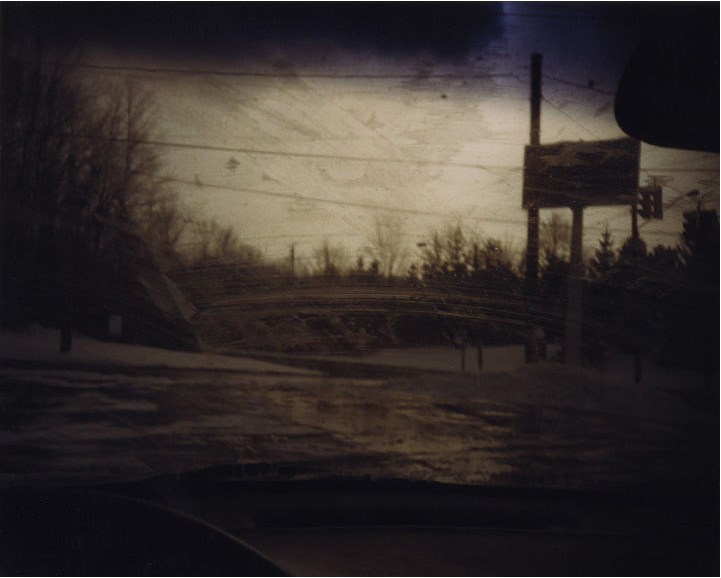
Great Shot: Todd Hido


2663, © Todd Hido

I remember over a year ago when I merely glanced at Todd's work. That was before I really knew his work or who he was, thus, he was placed somewhere in the back of my head. Though recently I have found him again, only now, I have a great appreciation for the work he makes and the process he goes through. The photograph above is one of his many "landscape" photographs. Todd shoots primarily at night; he is drawn to the nightlife and the different characteristics that stand out during nighttime. The quietness, the mystery, and especially the overall mood of the night. I feel that these characteristics are most definitely brought through in not only the photograph above, but all of his work. There is such a different quality of the nightlife and the photographs he takes represent this. His work is also curious and though it is moody, it is not 'in your face' dramatic. I really appreciate this subtlety he shares with the viewer. He is able to capture the mist, the grunge, the light, and other simple aspects of the weather and time that he is shooting. All of these combined really put the viewer in the place, where one is sort of mystified by place. It is an extremely interesting experience.

Todd's website is: www.toddhido.com

Great Shot: Mary Ellen Mark


Amanda and her Cousin Amy, Valdene, North Carolina, 1990 ©Mary Ellen Mark


Mary Ellen Mark began her art career as a painter, studying at University of Pennsylvania. She decided to take a photography class. After doing so, and with the help of a Leica, she turned to photography and more specifically, street photography. She earned a degree in photojournalism and in the mid to late 60's photographed for Look Magazine in London. Her images of London's teen heroin addicts for the article are said to have foreshadowed the rest of her career.
As an artist Mark has photographed for magazines and publications, while still photographing and documenting for herself. The image above shows her ability to warm up to the subject and allow them to do the same for her. Janis Bultman said in an interview with Mark that, "Mark has a rare gift for engaging the trust of her subjects. They reveal themselves to her sympathetic lens to an often unsettling degree, sharing their most intimate moments, as well as rage and sorrow and brittle moments of happiness." I find this statement to be true, each one of her images is an honest telling of some part of the people within it.

Great Shot: Will Steacy


Burned Car, Los Angeles, 2009 ©Will Steacy

Immediately upon reading the blog on Will Steacy I was drawn to his photographs. Will Steacy had an odd start in photography, but the night he will always remember is what encourages him to photograph such desolate scenes. While working at a shoe store Steacy was almost killed when two guy decided to rob the store. This night changed his life and allowed him to lose his fear when photographing his subjects. Steacy uses his camera to seek out what some may see as dangerous parts of town, bu that he finds exciting because of the guts it takes to go there.

The part that really drew me to his photos was not the subject but the inner glow that the photo has. Its not just because there is a burned up car that excites me, but the way it reaches out with that blue glow. The color is so inviting it makes me want to step right into the photograph . A lot of Steacy's work from the Down These Mean Streets project tend to possess this inner power. Steacy manages to make these completely rundown towns seem a lot less heavy by adding simple humor. Lastly Steacy's images really drove me to dive deeper and deeper, when I reached the end I was wishing there was more to look at.

To begin your journey through the streets with Will Steacy, more of his work can be found at www.willsteacy.com.

Great Shot: Richard Avedon


Nastassja Kinski and the serpent © Richard Avedon

Richard Avedon was born in New York in 1923. During his early years Avedon made his living through work in advertising. Throughout his career Avedon has maintained a unique style. His minimalism is very sophisticated and his creativity has no boundaries.
This photograph of Nastassja Kinski is so breathtaking that it is almost unrealistic. It immediately grabs attension of the viewers and makes them feel and think. The contrast of warm and cold bodies, the seductiveness of the curves, the intensity of the moment all work together to create something unearthly. Richard Avedon knew exactly what he wanted and photographed for hours before he got this single shot. Everybody who was present in the studio during the photo shoot agrees that it was an "Avedon moment".


More work by Richard Avedon can be found on his website, http://www.richardavedon.com/

Great Shot: David Wright


Peter
, 2009 © David Wright

Born in 1983, David Wright is a photographer based in Maine, and has learned not only about himself through photography, but the world as well. In the beginning of 2009, David spent 2 months in the small village of Alebtong, Uganda. He photographed for a non-profit arts association for refugee children called A River Blue. Peter is one of a few elderly leaders left in the village because of killings and abductions caused by the Lord's Resistance Army for not offering help to fight the Ugandan Army. Having a brief knowledge of who Peter is, changes this image for me. There is a symbolic relationship with the tree rooted behind Peter and Peter himself. This image captures the emotion of standing alone, but standing strong.

David allows us to see the world beyond our own, he opens the door to what is now one of Africa's longest-running conflicts. He shows us his interest in life and the lives of others through his photography. Dorthea Lange once said, "The camera is an instrument that teaches people how to see without a camera." David Wright enables us to keep looking.

More work by David Wright can be found on his website, http://www.davidwrightphoto.com/

9.13.2010

Great Shot: Bill Jay


Michael Kenna © Bill Jay

Lately, I have been searching through the large archive of photographer interviews posted on this blog. While reading, I stumbled upon a 2007 Photo District News article in which, Darius Himes interviewed “the pre-eminent photo-historian and critic,” Bill Jay.

Over the course of Jay's career, he published twenty books of his photography and worked for the magazines Album, Creative Camera and finally Practical Photography. While working for Creative Camera, Jay was confronted by Tony Ray Jones who stated that "your magazine is shit, but I can see you are trying, so I have come to help." While Jay was offended by that statement, he realized that he could learn from Jones and included him in the magazine. Unfortunately, Jones had leukemia and passed away at a young age. This spurred Jay into the idea of taking snapshots of the photographers he worked with for a visual diary.

From 1968 through 2006 Jay photographed other photographers, often while they were working. As I looked through Jay's online archive, I noticed a picture of Micheal Kenna which was taken in 1983. I was immediately intrigued by this photograph because of the quirkiness of the scene in which Kenna and a parrot are having a stare-down. To fully understand why I find this interesting I first have to give you a bit of my own understanding of Kenna. As my previous blog entry stated, my work has been heavily influenced by Kenna's photography. Yet, in the time since I had found Kenna's images, I have never seen this side of him. I had always taken him for a serious natured person. His photographs do not have the sense of playfulness that is present within Jay's photograph. While Jay's photographs might be considered snapshots, they do have a deeper meaning besides being purely documentary. They show a glimpse of the photographer who is normally hidden behind their camera and are known because of the content in their images.

To see more of Bill Jay's photographs click the link below.
www.billjayonphotography.com

Great Shot: Adam Krawesky


© Adam Krawesky


The work of Adam Krawesky appeals to me on a number of levels including the strong notion of exploration and documentation. Although within the interview I read Krawesky says he would not classify his work as being similar to that of a documentarian I would argue saying that his study of these street environments is documentary in its focus and consistency. Krawesky explains that his interest in making images fell hand in hand with his love for walking around the city streets making images of what he saw. Although it may or may not be an inherent part of photography I can say the same was true for myself, photography became the fuel for going out and mapping an area. The narrative-like connection felt between Krawesky and his environment exemplified through his images is another motif I am attracted to. Within each image the viewer is presented with the beginning, end, or middle of a story, with the freedom to modify the missing pieces as they like. This image reflects both the spontaneous and inquisitive elements which run through much of Krawesky's work that I have seen. I find myself wondering more about the relation of the two boys if at all, more than the surrounding environment. Krawesky's ability to develop these inquires about the lives of complete strangers is accomplished through the removal of himself from his environment while retaining enough presence to capture intimacy, humor, and grief all upon a stretch of sidewalk. More work by Adam Krawesky can be found at www.inconduit.com

Great Shot: David Maisel


The Lake Project 23 ©David Maisel

David Maisel captures beauty and chaos with his aerial photographs of The Great Salt Lakes in the series 'The Lake Project'. In 'The Lake Project' series, and other series available on his website, Maisel deals with the underlying disaster that is Human intrusion in the natural environment. These intrusions include mining, clearcut logging, firestorms, etc. All of these actions have a great effect on these landscapes that Maisel photographs. These environmental changes often leave behind significant amounts of destruction in their wake, which in time reveal unnatural or uprooted substances that tamper with the existing landscape. Such substances often include cyanide, calcium deposits, and various minerals that have been unnaturally brought to the surface, therefore changing the aesthetic of the landscape. His subject is ever-changing.

I find myself continuously drawn to images that are aesthetically beautiful, yet at the same time, dysfunctional, disastrous, etc. I feel that behind most things beautiful, there is a complexity much deeper and even darker than the surface reveals. I think most of Maisel's photographs are serving just as much a political statement, as they are showing just how beautiful the landscape is in wonderful detail and composition. They almost look like minimalist paintings. Mark Rothko is a minimalist painter whose work comes to mind when I look at Maisel's vibrant colors, interesting patterns and compositions.

More work by David Maisel can be found on his website, www.davidmaisel.com

Great Shot: Richard Avedon

Malgosia Bela © Richard Avedon Foundation

I find myself drawn to the sculptural qualities Avedon achieves in his work. And, like the Baroque sculptures of Bernini, Avedon's photographs allude to movement and depict the subject at the precise moment within that movement where the essence of intent is captured. Avedon's access to the closets of the world's most famous designers meant his subjects often wore otherworldly attire. The combination of those two worlds is well evidenced in the photo above which was taken in New York during March of 2000 on 4x5 film. The model, Malgosia Bela, is wearing a dress by Yohji Yamamoto. The organic formation of material dance with Malgosia thus creating a truly dimensional experience within the confines of the photographic plane. In this case, the two subjects expertly mold into one. Each stands isolated from the environment in which they normally exist. Avedon creates a sculptural object. There is strong connectivity between the subject and Avedon, giving the image the breath of humanism. The quality is evident throughout his body of work. Looking at any one of his images one could quickly discern Avedon's love for his work.

More of Richard Avedon's work can be viewed on the Richard Avedon Foundation website, www.richardavedon.com.

Great Shot: Alana Celii


© Alana Celli

Alana Celli was born outside of Chicago but moved around a lot as a child. Coming from a family with art in its background, it was only natural for her to follow in her father's footsteps. Her interest in photography grew when she was given a camera by her parents at a young age. She was always a very timid and shy girl. She became fascinated with the internet and often spent her time online versus socializing and making friends. All this time spent as a child online contributed to her interest in the internet and graphic design. When she decided to go to art school her parents supported her greatly which helped her continue forward towards getting her BA from Parsons.

There seem to be two sides to Celli's work. A more direct fine art side and a more abstract side. Both styles of hers are extremely captivating. I was mainly drawn to her more abstract work. Like the image from above, I am fascinated when a photo is not just a two dimensional flat piece of paper. What seem to be chemical stains on the image add dimension, age, and mystery to this photograph. The out of focus, Uta Barth stlye image in the background is something I find very beautiful and engaging because of the soft, rich, pastel-like colors. Celli experiments a lot with different processes and cameras which is something I enjoy greatly myself. That is one of the reasons I respond so strongly to her photography as well as how her photographs hold such mystery, personality, and great beauty.

Great Shot: Toni Pepe


Untitled © Toni Pepe

Toni Pepe grew up in the Boston area. She attended Michigan State University. She received her undergrad in literature and visual arts. In April of 2008 she obtained her MFA in imaging Arts from the Rochester Institute of Technology. About 7 years ago she moved back to the Boston area.
In Toni Pepe's work she combines literature and writing with visual arts. Her rich imagination and dreaming shows through her imaging. Pepe's rich color and theatrical quality draws you into the image. And the dark nature engrosses you. The use of dust creates a nostalgic feeling that allows the viewer to relate to this feeling.

More work by Toni Pepe can be found on her website, Toni Pepe.

Great Shot: Kate MacDonnell


© Kate MacDonnell


What I like most about Kate MacDonnell's photographs is that she takes the beautiful things that happen every day, captures them, and then shares them with others. I feel like I have the same need to share these things when I am taking my photographs. I feel myself pausing in day when I see something that catches my eye. I want to photograph it not only for me but I want others to see the world as I did in that moment too. Kate's series "100 Ways to Kneel and Kiss the Ground" is about showing images that are of common and not so common things that were viewed with the same sense of awe. She also talks about how she is intrigued by what we usually do not pay attention to, such as nuetral spaces and interior walls. The title that she choose for this work is very fitting because all of these moments, no matter how big or small, show the appreciation one can have and keep with a photograph.

More work by Kate MacDonnell can be found at http://katemacdonnell.com/index.html


Newly Born © Eugene Richards

Eugene Richards was born in Dorchester, Massachusetts.  He graduated from Northeastern University with a degree in English.  He then studied photography with Minor White.  He has works published in Life, The New York Times magazine, National Geographic, Esquire, the New Yorker, and he was a member of Magnum Photos for a total of eighteen years. He has also published fifteen photo books, and wrote and directed a short film.

This is an image of a Sicilian woman just after she gave birth. The image was taken in 1990 in Washington, D.C. for Life magazine. The tears running down her face are tears of joy, which were, at first, misleading because I assumed something went wrong with the birth.   I am interested in this image because of how close Richards got to the subject during such an intense moment.  The woman's husband was just about to lean over and give her a kiss when Richards took the shot.  Richards takes photographs of intense situations, which is unusual because he says that he is a shy person. Although, when photographing he finds it easier to get up close to his subjects and he prefers shooting with a wide-angle lens.  I find his images captivating because of his lack of self-consciousness when he is getting in close for the shot.  His images suggest that he has no fear stepping into someone else's reality to record their most emotional moments.  

More work by Eugene Richards can be found on his website http://www.eugenerichards.com/

Great Shot: Alec Soth


untitled 40, Bogota © Alec Soth

This photograph is from Alec's project entitled "Dog Days, Bogota" where he spent two months in Columbia photographing while waiting to take home his newly adopted daughter (Carmen Laura). With a book filled with letters, poems and pictures left to Carmen from her birthmother. Alec took inspiration from the words left to his daughter, which read "When I think about you, I hope your life is full of beautiful things." From this, Alec began creating his own book for his daughter, where he aimed to photograph the tough beauty in his daughter's birth place of Columbia.

I personally enjoy most his purpose of creating this project. He hopes to have captured the beauty and essence of his adopted daughters birth place for her.

What I enjoy about this photograph specifically is the statement of being an encaged animal. The dog resembling so much of a wolf that you would expect to see roaming the wilderness, laying at the edge against the bars with a wandering look of its own nature. The dog looks to want to be outside but its being withheld from being its wild self. A beautifully sad photograph that depicts modern nature.

More work by Alec Soth can be found on his website, www.alecsoth.com.

Great Shot: Lynn Saville


© Lynn Saville

Lynn Saville grew up in North Carolina where she, her father and brother would spend nights gazing through a telescope and capturing photo's of the stars. She later moved to New York City where she now lives with her husband, but tells that she fell in love with the city as a young girl. Her first love of photography and shooting night scenes and continued into her adult life where she now shoots in NYC. Her focus and specialty is in photographing the "boundary times between night and day."

I was instantly attracted to Lynn's work with the first photograph I looked at. Soon after viewing her website I fell in love with her work. I am incredibly inspired by her work and want to expand and experiment more with long exposures and night scenes. The color in many of her photographs is also what I strive for in many of my own photo's.

This photograph is from her series Night/Shift, which she photographed NYC focusing on the, "forgotten or unloved places, celebrating the city and the moments of transition." Going out at dusk and dawn she soon fell in love with these places and the way the natural and artificial lighting created a beautiful combination. The ghost like figures that often crept into her photo's annoyed her at first but she eventually learned to accept the figures and embrace them as part of the photo.

More work by Lynn Saville can be found on her website, www.lynnsaville.com

Great Shot: Ali Bosworth

© Ali Bosworth

Ali Bosworth's photographs capture the subtle moments in his everyday life and turns them into a work of art. Most of his work is focused on his girlfriend, Sinead, their cats, as well as their adventures together. With there warm tones and antique quality, his work is extremely intriguing and quite beautiful. I highly respect his work for the fact that he strictly uses film and scans every one of his negatives himself. Looking through his work I knew he would be one of my new favorite photographers because I, myself love to photograph my everyday life with film cameras. Most of all I enjoy how natural his photographs are.

More work by Ali Bosworth can be found at www.alibosworth.com

9.12.2010

Great Shot: Izabella Demavlys


Saira © Izabella Demavlys

In 2009, Izabella left her job as a fashion photographer and departed to Pakistan in order to pursue her calling of shooting in a more documentary style. Her reasoning for the switch in motivation is quite simple. In an interview she did with Camera Obscura, Izabella explained that "After years of struggling and trying to find my voice within fashion, I suddenly realized that it was not my calling. My fashion work couldn't engage the viewers in any way. It was not changing any perspectives or behaviors, inspiring or making any meaningful points." I completely relate with Izabella's need to communicate with and move the viewer through her images, it's a concept I've been grappling with the past two years at MIAD. Unfortunately for me, my geographical situation limits my subject matter. Izabella's choice to visit Pakistan shows the dedication and drive to pursue her documentary calling.

In Pakistan, Izabella started a series titled "Without a Face." This series documents women who have been victims of acid and kerosene burns as results of being attacked. The images, albeit grotesque and shocking at first, abound with a certain inner beauty and a quiet dignity. On her web-site, Izabella elaborates that the intention of this series is ". . . to follow these women through a couple of years while they not only rebuild their faces through surgery but also build the courage, hope, acceptance and self-esteem to continue living a life with a disfigured face."

Not only is Izabella Demavlys' imagery beautiful and meaningful but it also brings to light social issues. Many viewers, such as myself, may have had no inclination of these horrific attacks taking place until seeing Izabella's images and reading of the women's stories. These photographs offer the subject a way of telling her story with the hope of sparking a greater social change.


More work by Izabella Demavlys as well as information on a proposed Acid Crime Prevention Bill in Pakistani legislation can be found on her website, www.izabellademavlys.com.